
Winter Preparation & Property Maintenance
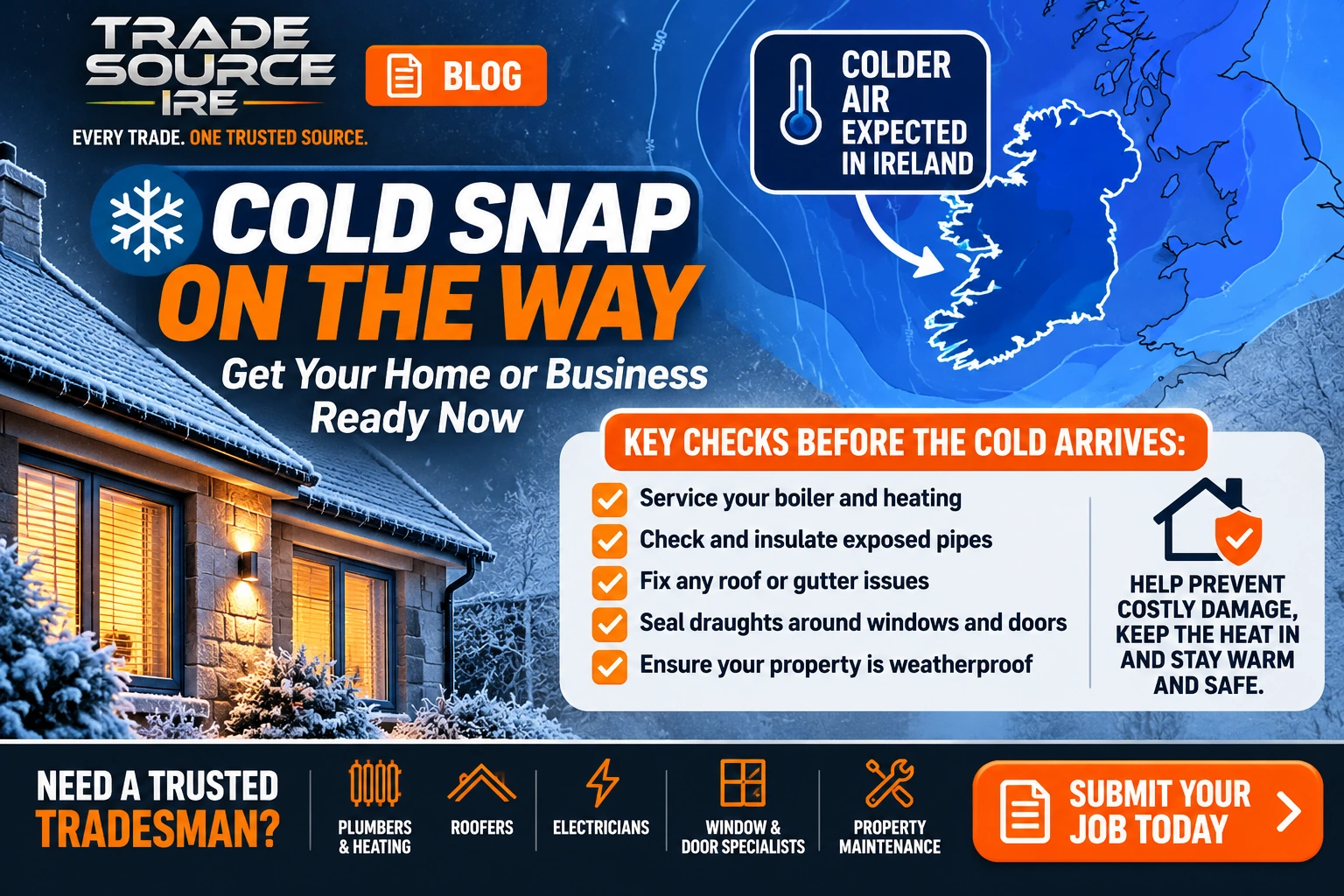
A sudden drop in temperature can quickly expose problems around a home or business.
Frozen pipes, boiler faults, leaking roofs, blocked gutters, draughty windows and electrical issues are far easier to deal with before the cold weather arrives.
What should you check before a cold snap?
Before temperatures drop, service your heating, insulate exposed pipes, locate your stopcock, repair roof and gutter problems, seal unnecessary draughts, test smoke and carbon-monoxide alarms and prepare for possible power interruptions.
These simple checks can help prevent expensive water damage, heating failures and emergency call-outs.
Is a severe cold snap definitely coming?
As of 1 November 2026, Met Éireann’s official forecast shows colder nights, with overnight lows of 0°C to 4°C in places, with milder conditions on south and east coasts, but it does not currently confirm a prolonged or severe nationwide freeze.
Its extended outlook suggests temperatures may remain around or slightly above average through much of November, although colder periods and winter hazards remain possible later in the season. Forecasts beyond one week carry greater uncertainty and should not be used as guarantees.
Atmospheric events such as a Sudden Stratospheric Warming can influence winter weather patterns, but they do not guarantee snow or a severe freeze in Ireland. Met Éireann’s published explanation is background information, not confirmation that such an event is forecast for this winter.
The sensible approach is simple: follow Met Éireann for the latest forecast and prepare the property before winter problems appear.
1. Service Your Boiler and Heating System
Do not wait until the first freezing night to discover that the heating is not working.
Arrange a service where required and ask the heating professional to check:
- Boiler operation
- Heating controls and timers
- System pressure
- Radiators and valves
- Hot-water cylinder
- Pumps and circulation
- Visible pipework
- Magnetic filters and inhibitor levels
Domestic natural-gas and LPG work must be carried out by a current Registered Gas Installer. Rooms containing fuel-burning appliances must also remain properly ventilated—never block required vents to keep out the cold.
You can:
- Find plumbers and heating professionals across Ireland
- Read the Trade Source IRE gas-boiler servicing guide
- Review indicative plumber and heating costs
2. Protect Pipes Before Temperatures Fall Below Zero
Water inside an exposed pipe can freeze, expand and split the pipework. The damage may only become obvious when the water thaws and begins leaking through a ceiling, wall or floor.
Uisce Éireann advises homes and businesses to protect exposed pipes, outdoor taps, water tanks and pipework in unheated areas. It also recommends knowing where the internal stopcock is located so the water can be turned off quickly if a pipe bursts.
Check pipework in:
- Attics
- Garages
- Sheds
- Plant rooms
- External walls
- Under sinks beside outside walls
- Unheated commercial units
- Holiday homes and vacant properties
Use suitable pipe insulation, repair obvious leaks and close gaps where cold air enters around pipes.
For vacant homes, rental properties and unused business premises, arrange regular inspections during very cold weather. Ask a plumber about suitable isolation or draining and any water-dependent appliances before turning off supplies.
3. Know What to Do if a Pipe Freezes
Possible signs of a frozen pipe include little or no water from a tap, visible frost on pipework or unusual noises when a tap is opened.
Uisce Éireann advises turning off the internal water supply and, where applicable, the cold-water tank stopcock before investigating. Turn on nearby cold taps to relieve pressure; leave hot taps off. Never use a naked flame, blowtorch, immersion heater or central heating to thaw a frozen pipe. If you are unsure what to do, call a plumber.
Where the pipe is damaged, inaccessible or close to electrical equipment, turn off the water supply and contact a plumber.
Request a plumber through Trade Source IRE.
4. Check the Roof, Gutters and External Drainage
Winter weather can turn a minor roofing problem into active water ingress.
Before colder, wetter weather arrives, look safely from ground level for:
- Missing or slipping slates
- Damaged ridge tiles
- Loose flashing
- Blocked gutters
- Cracked or disconnected downpipes
- Leaks around chimneys
- Flat-roof damage
- Overflowing drains
- Loose fascia or soffit sections
Do not climb onto a wet, icy or damaged roof yourself.
A roofing contractor can inspect the roof, gutters and flashing and deal with defects before further rain, frost or wind causes additional damage.
5. Stop Draughts—but Do Not Block Ventilation
Cold air can enter around poorly fitted windows, external doors, attic hatches, letterboxes and service openings.
Check for:
- Worn window seals
- Gaps around door frames
- Draughts beneath external doors
- Poorly sealed attic hatches
- Gaps around pipe and cable entry points
- Damaged glazing
- Doors or windows that no longer close properly
Draught-proofing can improve comfort and reduce heat loss, but required ventilation must remain open—particularly where gas, oil, coal, turf, wood or other fuel-burning appliances are used. Carbon monoxide can be produced by any fuel when it burns, and blocked ventilation can increase the danger.
- Find window and door specialists
- Find insulation contractors
- Read about home-energy upgrades that reduce heat loss
6. Test Smoke and Carbon-Monoxide Alarms
Check every alarm using its test button and replace expired units in line with the manufacturer’s instructions.
Carbon-monoxide alarms provide important additional protection, but they are not a replacement for maintaining appliances, boilers, stoves, flues, chimneys and ventilation.
Never use a barbecue, camping stove, generator or outdoor heater inside a house, garage, shed or commercial premises. Gas Networks Ireland warns that these appliances can produce dangerous levels of carbon monoxide and should only be used outdoors in a properly ventilated area.
7. Prepare for Possible Power Interruptions
Severe weather can damage electricity lines and interrupt supplies.
Before winter weather develops:
- Keep torches and spare batteries available
- Charge phones and power banks
- Know how to access ESB Networks PowerCheck
- Protect important business data
- Have emergency contact numbers available
- Avoid overloading extension leads with portable heaters
- Switch off hazardous equipment during an outage
- Follow proper generator-safety guidance
ESB Networks recommends familiarising yourself with its outage information before severe weather and switching off equipment that could create a hazard when power is restored.
Electrical faults, overheating sockets, repeated tripping and damaged wiring should be assessed by a Safe Electric Registered Electrical Contractor.
Find electricians across Ireland.
8. Winter-Proof Rental and Commercial Properties
Landlords, property managers and business owners should pay particular attention to premises that are vacant overnight, at weekends or between tenancies.
Check:
- Heating and frost-protection settings
- Exposed plumbing
- Stopcock and isolation-valve locations
- Boiler and plant-room access
- Roofs, gutters and drains
- Door and window security
- Emergency contractor details
- Staff access procedures
- Insurance requirements
- Contact arrangements for vacant units
The Government’s Be Winter Ready guidance encourages households and businesses to prepare in advance and maintain practical plans for severe weather and possible disruption.
Trade Source IRE can help landlords and businesses request:
- Property-maintenance contractors
- Plumbers and heating professionals
- Electricians
- Roofing contractors
- Window and door specialists
How Trade Source IRE Can Help Before or During Cold Weather
When colder weather arrives, suitable tradespeople can become busy quickly.
Instead of spending hours ringing different numbers, you can send your job details to Trade Source IRE once.
Tell us:
- The trade required
- Your county, town or Eircode area
- What has happened
- Whether the issue is active or urgent
- The property type
- Your preferred timeframe
- Photos where safe and useful
- Any temporary action already taken
Trade Source IRE reviews the enquiry and helps route it towards potentially suitable professionals where network availability allows. It is free to enquire, there is no obligation to proceed and you remain in control of comparing options and choosing who gets the job.
We can help you find:
- Plumbers and heating professionals
- Roofing contractors
- Electricians
- Window and door specialists
- Insulation contractors
- Property-maintenance contractors
- Emergency repair support
- All trades available through Trade Source IRE
Submit your cold-weather repair or maintenance job
Cold-Weather FAQs
When should I prepare my property for a cold snap?
Complete checks before temperatures fall below zero. Planned maintenance is normally easier to organise—and less stressful—than finding emergency help after a pipe bursts or the heating fails.
Should I leave the heating running during very cold weather?
Uisce Éireann recommends keeping your home warm, including lower heating settings while away so warm air can circulate. Follow your heating system’s frost-protection instructions or ask a heating professional. If a pipe is already frozen, follow the frozen-pipe advice above instead of using the heating system to thaw it.
Should I leave a tap dripping?
Uisce Éireann warns that dripping taps and unprotected pipes can freeze and crack. Insulating vulnerable pipework and dealing with draughts is a better first step. Follow current Uisce Éireann advice for your particular property and water supply.
Can I block air vents to keep the house warmer?
No. Keep required ventilation clear, especially in rooms containing fuel-burning appliances. Blocked vents can increase carbon-monoxide risks. Ask a qualified professional before changing ventilation.
What should I do if I smell gas?
Open windows and doors, do not smoke or use a naked flame, do not switch electrical equipment on or off, leave the immediate area and call Gas Networks Ireland’s 24-hour emergency line on 1800 20 50 50 from outside.
Who should I call about fallen wires or an electricity emergency?
Stay well clear and contact ESB Networks on its 24-hour emergency number: 1800 372 999. Always assume damaged or fallen electrical equipment is live.
Get Ready Before the Temperature Drops
Cold weather does not need to become a property emergency.
Check the heating, protect the pipes, fix leaks, clear the gutters and deal with draughts before the first serious frost. For businesses and landlords, make sure empty or lightly used premises are included in the winter plan.
Prepare early. Protect your property. Get the right trade involved.
Submit your job to Trade Source IRE
Every Trade. One Trusted Source.
Official Republic of Ireland Sources
- Met Éireann — National Forecast
- Met Éireann — Extended Range Forecast
- Met Éireann — Sudden Stratospheric Warming Explained
- Government of Ireland — Be Winter Ready
- Uisce Éireann — Winterproofing Your Property
- Uisce Éireann — Frozen or Burst Pipes
- Gas Networks Ireland — Carbon-Monoxide Safety
- Gas Networks Ireland — What to Do if You Smell Gas
- CRU — Gas Works in Your Home and Registered Gas Installers
- ESB Networks — Preparing for Severe Weather
- Safe Electric — Electrical Home Safety
Forecasts can change. Always check the latest Met Éireann forecast and weather warnings before making weather-dependent plans. This article provides general property-preparation information and does not replace an inspection or safety assessment by a qualified professional.